Why Do I React Before I Think?
Your tone changes. Your body tightens. The words are already coming out. Then afterwards you understand what happened.
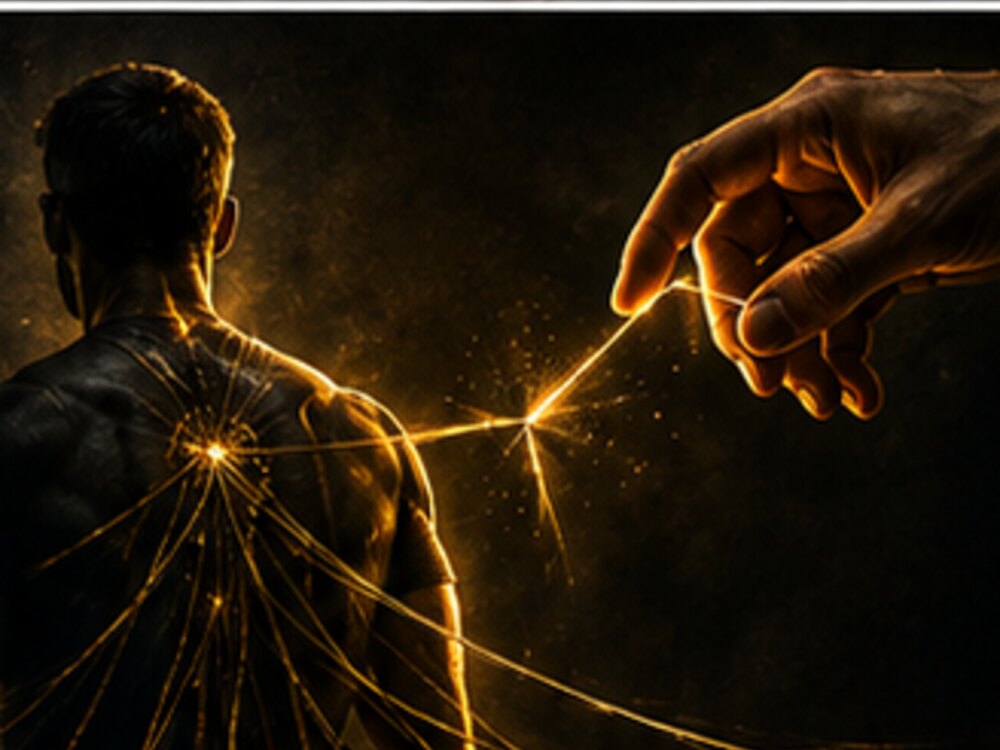
A reaction can begin before you have fully named what you think is happening. A tone, look, silence or question can carry an old meaning so quickly that the urge to defend, leave, shut down or prove something feels immediate.
The explanation can arrive after the reaction has already started
Your voice changes. Your jaw tightens. You interrupt. You go quiet. You feel the urge to leave. Only afterwards do you build the full explanation for why the moment felt threatening, disrespectful or unsafe.
That is why “just think before you react” can be easier to say than to do. You first need to notice the reaction beginning.
Look for the first sign, not the biggest one
The first clue may be physical: heat in your face, tension in your chest, a change in breathing, a faster voice, clenched hands or the sudden need to get the last word.
It may also be a sentence: “Here we go again.” “They do not respect me.” “I need to get out of here.” The earlier the clue, the more room you have to choose.
Ask what your mind thinks is being threatened
Sometimes there is a real problem and a firm response is needed. Other times the threat is to an image, expectation or old role: being right, being in control, not looking weak, not being rejected, not being ignored.
You do not have to agree with somebody to pause. The pause is there so that your response belongs to the situation in front of you, not only to the meaning your mind added in the first second.
A reaction has a sequence
Try reviewing one recent moment as: cue → meaning → body/urge → action → consequence. You are not looking for a perfect psychological explanation. You are looking for the earliest part you can actually recognise next time.
You only need enough space for one different choice
The goal is not to become passive or never feel angry. It is to create enough space to check what is happening before the old response decides everything.
Notice. Stop. Check. Choose. That is what The Pause is built for.
If you notice it afterwards, that still counts
Afterwards is where awareness often starts. Review what happened without rewriting it to make yourself right or wrong. Find the first sign. The next time, see whether you can notice that same sign a little earlier.
Try The Pause
Try The Pause →Or go deeper: Explore Identity, Ego and the Mask →